Microtia
Mr O'Toole is one of the world's most experienced microtia surgeons, jointly leading Europe's largest Ear Reconstruction Centre at the Royal Free Hospital.
What is Microtia?
The Greek word "microtia" means, in English, "small ear". The condition occurs in 1 in 6,000 babies around the world — around 80 children a year are born with the condition in the UK. Mostly it presents without any other detectable problem, but it can be linked to conditions such as Hemifacial Microsomia, Goldenhar's Syndrome, and Treacher Collins Syndrome.
Trained in Paris in 2007–2008 as Françoise Firmin's assistant, Mr O'Toole has gone on to establish an international reputation for excellence in this complex surgery. At the Royal Free Hospital, he jointly leads Europe's largest Ear Reconstruction Centre for adults and children, where hundreds of procedures are performed annually.
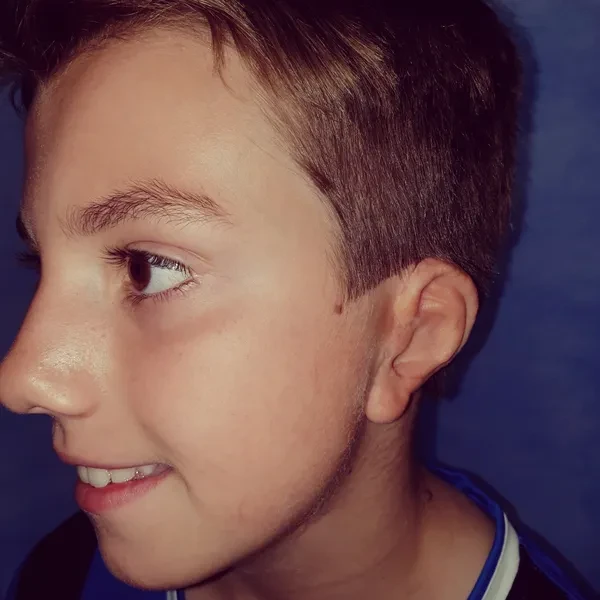
Rib Cartilage Reconstruction
Microtia reconstruction necessitates recreating the ear's contours with a resilient framework, for which the ideal material is the patient's own rib cartilage. Surgeons who are experienced in sculpting rib cartilage can reliably reproduce the contours of the ear. While there will be a small scar of around 6cm on the chest, the rib is reconstructed during surgery so no deformity results.
Two operations are required. The first involves sculpting a rib cartilage framework, which is then placed in a skin pocket at the site of the new ear. In the second operation — performed around six months after the first — the ear framework is released from the side of the head to give it prominence and create the sulcus behind it, with symmetry with the other ear being the aim.
Parents should not be tempted or persuaded into agreeing to surgery before their child is around 8 years of age.
Prosthetic Ears
Prostheses are generally reserved for cases in which rib cartilage cannot be used — for example when it is damaged or calcified. All prosthetic material implants placed under the skin are likely to extrude in the long term and should be avoided. Mr O'Toole also travels abroad to operate; for patients from underprivileged communities this surgery can be organised as part of a charitable mission, such as his regular trips to Cambodia.
Learn about Mr O'Toole's charitable work in Cambodia →Book a Consultation
Mr O'Toole offers consultations at 152 Harley Street, London. He will assess your individual case and discuss the most appropriate treatment options for you or your child.
Contact Us